
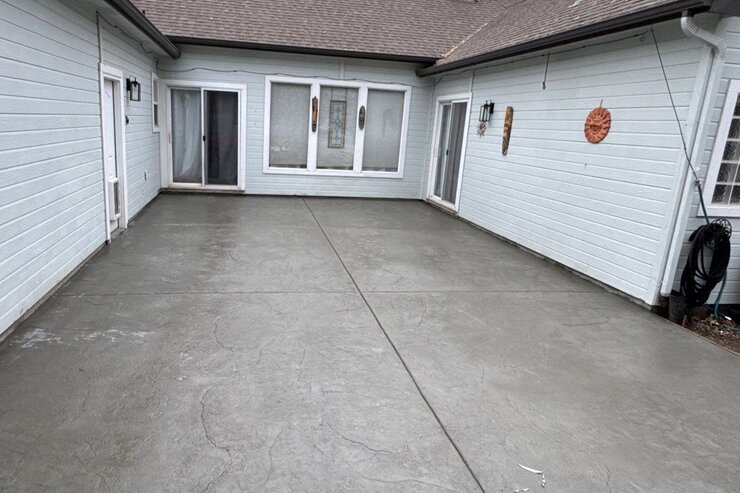
If you live in Providence long enough, you will watch a sidewalk crack. It is not bad luck and it is not always bad workmanship — concrete cracks for predictable, physical reasons, and Southern New England's climate accelerates almost all of them. This guide explains why sidewalks crack, which cracks matter, and what you can do about each type. Understanding the cause is the first step to choosing the right repair instead of paying for the wrong one.
Providence sees well over 60 freeze-thaw cycles per winter. Water seeps into the concrete's pores and into hairline cracks, then freezes and expands roughly 9% in volume. That expansion pries the crack wider every single cycle. Come spring, a hairline crack you ignored in November is a structural crack. This is why sealing small cracks before winter is the single most cost-effective thing a Providence homeowner can do.
Rock salt and calcium chloride lower the freezing point of water, which means more freeze-thaw cycles inside the slab, not fewer. Salt also draws moisture into the surface and corrodes any rebar near the top. The result is "scaling" — the top layer flakes and pits, exposing aggregate. Salt damage is a leading cause of the spalling we repair every spring across Providence.
Providence's mature tree canopy is beautiful and brutal on concrete. Maple, oak, and sycamore roots grow under and against sidewalk panels, lifting them and creating the vertical trip hazards the city cites under the city sidewalk maintenance ordinance. Pouring new concrete over live roots only delays the same problem — proper repair prunes the roots and installs a root barrier first.
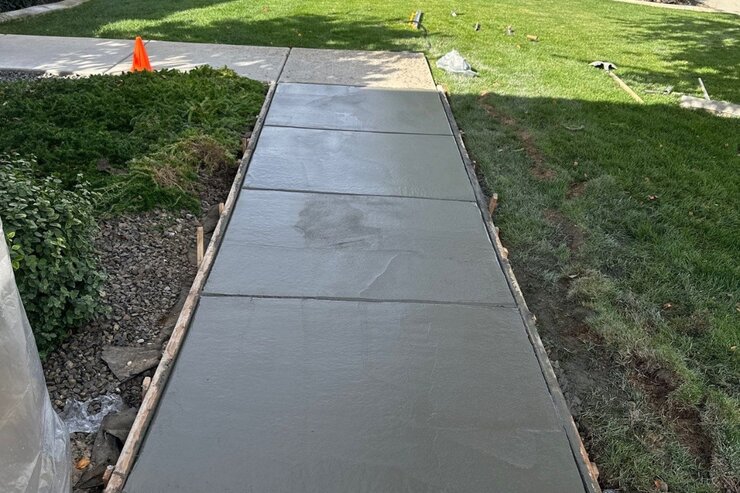
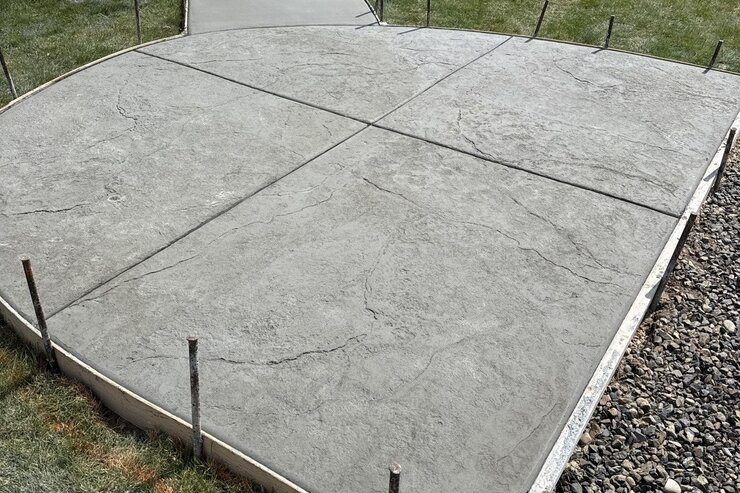
A sidewalk is only as stable as the ground beneath it. When the sub-base washes out near a downspout, settles after a wet season, or was poorly compacted during the original build, the slab loses support and cracks or sinks. The fix here is rarely replacement — lifting the slab and filling the void with polyurethane foam restores support without demolition.
Fresh concrete shrinks as it cures and loses water. Control joints are tooled in to force this shrinkage to crack in straight, hidden lines. When joints are spaced too far apart, cut too shallow, or skipped, the slab cracks randomly instead. These cracks are usually cosmetic but should still be sealed to keep water out before freeze-thaw widens them.
Standard residential sidewalks are poured 4 inches thick for foot traffic. Drive a delivery truck or dumpster across a section poured for pedestrians and it will crack. Driveway approaches and any concrete that bears vehicle weight should be poured 5–6 inches thick with rebar — something we always check during an estimate.
Hairline cracks under 1/16 inch are usually cosmetic — seal them before winter. Cracks between 1/16 and 1/4 inch are structural and should be repaired promptly. Cracks wider than 1/4 inch, cracks with vertical offset, and panels that rock under foot indicate failure that typically needs grinding, leveling, or replacement. When in doubt, a free SidewalkendsFarm assessment will tell you exactly which category your sidewalk is in — and the lowest-cost fix that solves it for good.
Ready to stop a small crack from becoming a big bill? Call (401) 555-0148 or request a free estimate, and explore our crack repair, leveling, and sealing services.