
The cheapest sidewalk repair is the one you never have to make. Most Providence property owners only think about their concrete once it is already failing — but a modest maintenance and sealing program keeps sound concrete sound, adding ten to fifteen years of life for a fraction of what reactive repairs and replacement cost. You do not have to wait for damage to act.
Providence's climate is uniquely hard on concrete. More than sixty freeze-thaw cycles a winter drive water in and out of the slab's pores, and the de-icing salt spread on every walkway pulls extra moisture in and accelerates the cycle. Unprotected concrete absorbs that brine, scales at the surface, opens at the joints, and lets water reach the sub-base — the slow-motion sequence behind most of the spalling, cracking, and settlement we repair every spring.
None of that is inevitable. The damage depends almost entirely on whether water and salt can penetrate the concrete, and that is something a maintenance program controls directly. New or resurfaced concrete should be sealed within its first year and resealed every three to five years; even older sound slabs benefit immediately from sealing before winter.
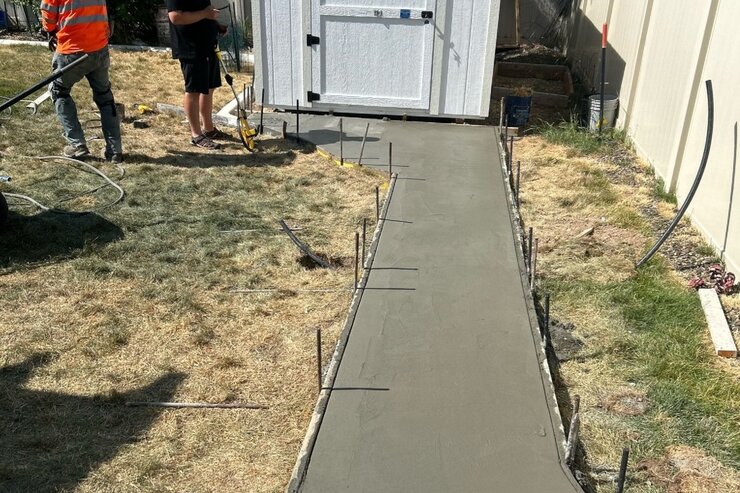
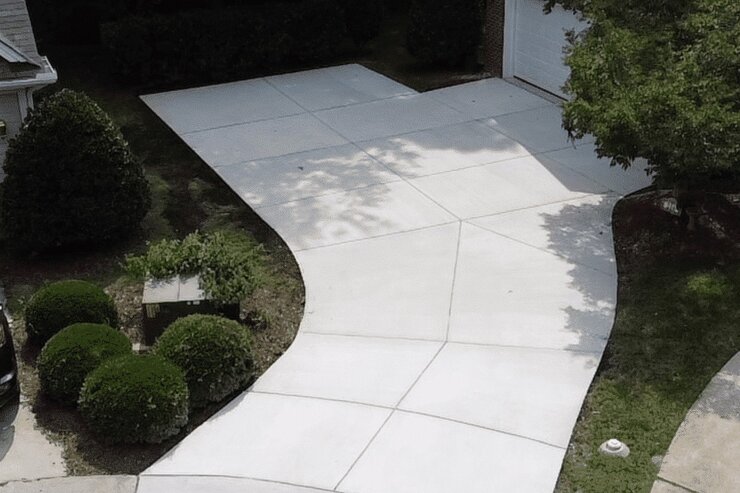
A maintenance visit starts with a 4,000 PSI pressure-wash to clear dirt, salt, and biological staining, followed by a close inspection in which we spot-seal any new cracks under an eighth of an inch and reseal expansion joints where the sealant has begun to fail. Catching these small openings is what keeps water out before it can do structural harm.
The core of the program is a penetrating siloxane or silane sealer that soaks about a quarter inch into the concrete and bonds at a molecular level, forming a hydrophobic barrier against salt brine and water. Unlike topical acrylic coatings that sit on the surface, peel, and turn slick when wet, a penetrating sealer never changes the texture or look of the concrete and keeps it ADA slip-resistant. We document the slab's condition each visit so you can track wear and plan ahead.
Reactive concrete management is the most expensive way to own a sidewalk: you pay nothing until something fails, then you pay for spalling repair, crack repair, leveling, or full replacement all at once. A maintenance program inverts that — small, predictable annual costs that prevent the large, disruptive ones. Sealing a slab for a couple hundred dollars routinely prevents a multi-thousand-dollar replacement a few years out.
Maintenance is for concrete that is still in good shape; it preserves what you have rather than fixing what is already broken. If a slab is already spalling badly or cracked, we will address that first and then put it on a maintenance schedule. The earlier a property starts, the more it saves — which is why HOAs and commercial owners increasingly budget sealing as routine upkeep rather than an afterthought.
A few sealing visits over a decade cost a fraction of the replacement they prevent:
| Per slab over 10 years | Maintenance Program | Reactive Replacement |
|---|---|---|
| Sealing every 3–5 yrs | $150 – $350 each | — |
| 10-year maintenance total | ~$600 – $900 | — |
| Eventual replacement | Deferred 10–15 yrs | $1,200 – $2,500 |
| Surface scaling | Prevented | Likely |
| Disruption | Minimal | High |
Across an HOA or commercial portfolio the savings multiply: protecting concrete on a schedule defers entire replacement cycles and turns an unpredictable capital expense into a small, planned operating cost.
Each visit cleans, inspects, and protects your concrete so it survives Providence's salt and freeze-thaw:
We use penetrating siloxane and silane sealers rather than topical coatings that peel and turn slick, and we document your concrete's condition every visit so you can plan ahead. Annual plans for homeowners, HOAs, and commercial properties lock in priority scheduling and discounted rates.
Want to stop paying for repairs you could prevent? Ask about a Providence sidewalk maintenance plan before this winter. Call (401) 555-0148 or request a free estimate online and we'll be at your Providence-area property within two business days.