
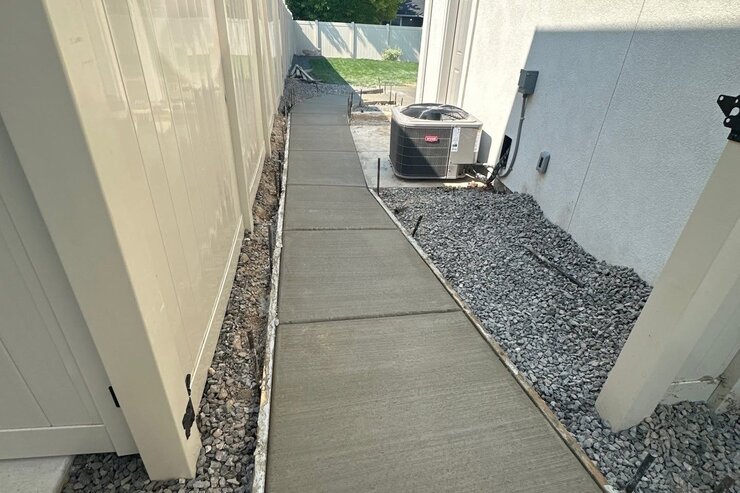
A raised lip in your sidewalk is a lawsuit and a city citation standing in plain sight — but fixing it almost never requires replacing concrete. In the great majority of cases a trip hazard can be ground or tapered flush in under two hours, with photo documentation in hand for your insurer or the City of Providence. You do not have to replace the walkway to make it safe and compliant.
A trip hazard is any vertical displacement greater than a quarter inch in a walking surface — and they form constantly in Providence as freeze-thaw heave, settlement, and tree roots push adjacent panels out of alignment. The danger is not just someone stubbing a toe. Under the ADA and the City of Providence's pedestrian standards, that offset is a defect the property owner is responsible for, and the city sidewalk maintenance ordinance puts liability for any resulting injury squarely on the adjoining owner.
For a homeowner that can mean a six-figure premises-liability claim from a single fall. For a business, an apartment complex, or an HOA it can mean repeated claims, rising insurance premiums, and a city violation notice with a compliance deadline attached. The good news is that the fix is fast, cheap, and permanent when it is done correctly.
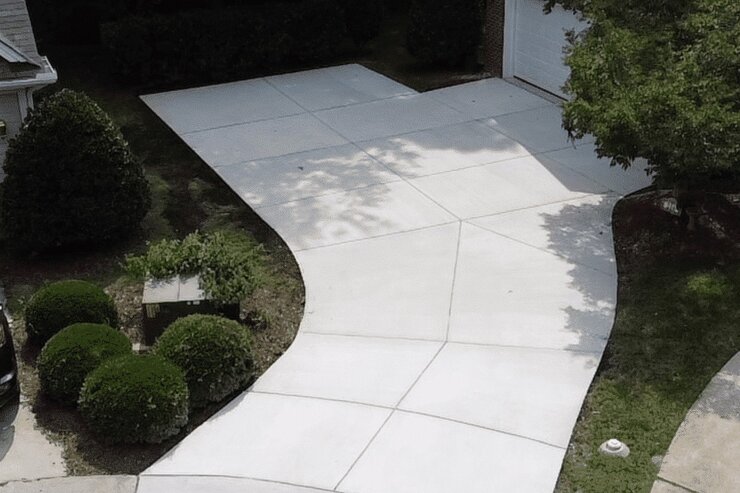
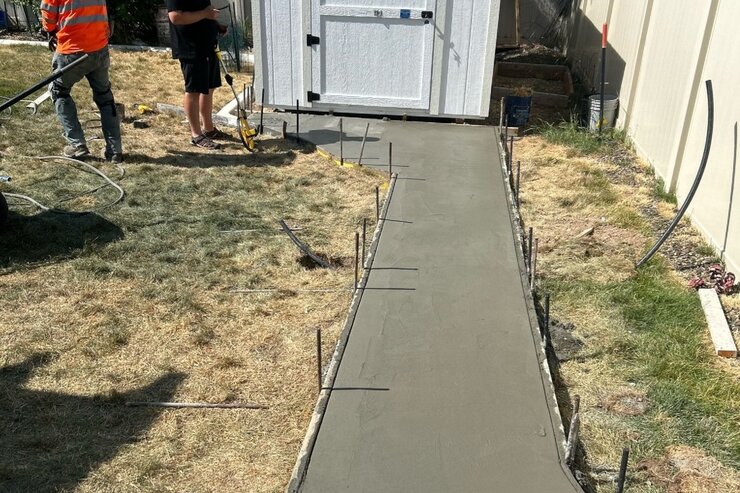
The method depends on the size of the offset, and choosing the right one is the whole job. For displacements up to about 1.5 inches on sound concrete, we grind the high edge down with a diamond cup wheel and feather it into an ADA-compliant 1:12 ramp — the same dust-controlled grinding used for joint repair. For offsets up to about four inches where the panel is intact, we lift the low side with polyurethane foam so both panels meet flush. For broken or rocking panels, replacement is the only real fix.
We arrive with a digital level and an offset gauge, measure the displacement, and document it before we touch it. Most grinds are finished in thirty minutes to an hour per location with no cure time, so the walkway reopens immediately. Every completed hazard is photographed before and after with the measurement visible, and we issue a written certificate referencing the ADA and Providence code standards the repair satisfies.
Replacing a panel to cure a one-inch lip is slow and expensive overkill: demolition, disposal, a permit, a new pour, and a week of cure time, all to solve a problem that a thirty-minute grind eliminates. Grinding and foam lifting remove the hazard the same day, require no permit for the simple cases, and preserve the existing concrete so there is no mismatched panel and no extended closure of a storefront entrance or apartment walkway.
We are candid about the threshold. Grinding suits offsets up to roughly 1.5 inches; foam lifting handles up to about four inches on intact slabs; beyond that, or when the concrete is fractured, replacement is the responsible recommendation. Matching the method to the defect is what makes the repair last and what keeps your documentation defensible if a claim is ever filed.
Eliminating a trip hazard by grinding or lifting is a small fraction of the cost of replacing the panel — and it closes a city violation just as effectively:
| Single trip hazard | Grinding / Lifting | Full Panel Replacement |
|---|---|---|
| Typical price | $250 – $600 | $600 – $1,100 |
| Additional hazard, same site | from $150 | $600+ each |
| Downtime | Immediate | 3 – 7 days |
| Permit required | No | Yes |
| Insurance documentation | Included | Add-on |
For commercial sites and HOAs the difference is decisive: a walkway with a dozen offsets can be made fully compliant in one morning of grinding for less than the cost of replacing two or three panels, with a complete photo packet for the risk-management file.
Each location is measured, corrected, and documented so the result is safe, compliant, and defensible:
Property managers, HOAs, and homeowners across Providence call us because we make hazards safe fast and document them defensibly. Every removal includes timestamped before-and-after photos and a written certificate referencing the ADA and Providence code standards the repair satisfies.
Have a raised lip or city violation on your Providence sidewalk? We can usually remove the hazard the same day — no replacement needed. Call (401) 555-0148 or request a free estimate online and we'll be at your Providence-area property within two business days.