
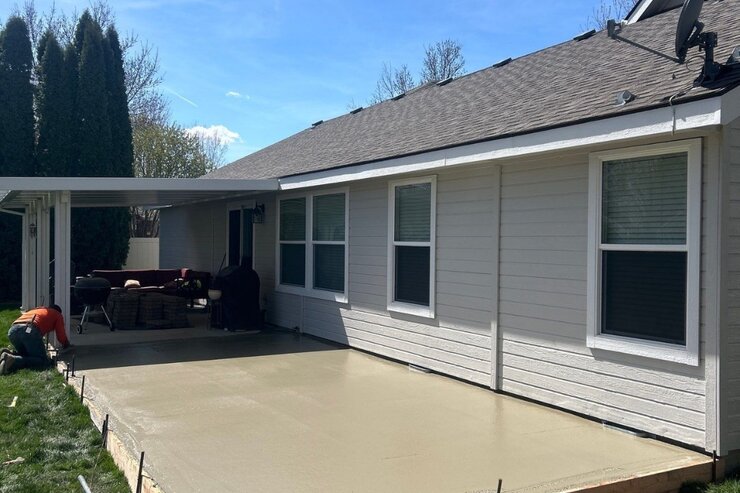
Flaking, pitted, peeling concrete looks like a slab on its last legs — but spalling is almost always a surface problem, not a structural one. If the slab beneath is sound, you do not need to tear it out; you need to resurface and protect the top. A bonded overlay and a penetrating sealer can restore a like-new surface for a fraction of replacement cost and stop the damage from coming back.
Spalling is the flaking and pitting of the top layer of concrete, and in Providence it usually traces to one of three causes. The biggest is de-icing salt: rock salt and calcium chloride drive extra moisture into the surface and trigger more freeze-thaw cycles right where the concrete is most exposed, popping off the top eighth-inch. The second is finishing error — overworking the surface or finishing while bleed water is present creates a weak, dusty top layer. The third is low air entrainment in the original mix, which leaves the concrete without the microscopic voids that let freezing water expand harmlessly.
The encouraging part is what spalling is not: it is rarely a sign that the slab has structurally failed. The body of the concrete below the scaled surface is typically still strong and well-supported. That means the fix is to rebuild and protect the surface, not to demolish and replace the entire slab.
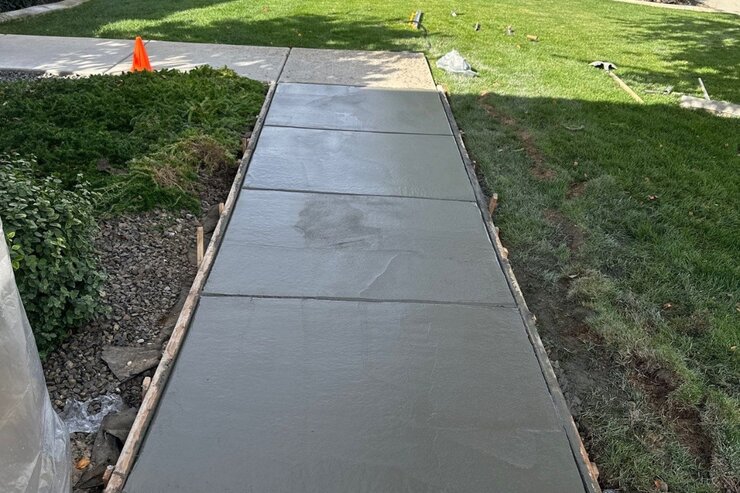
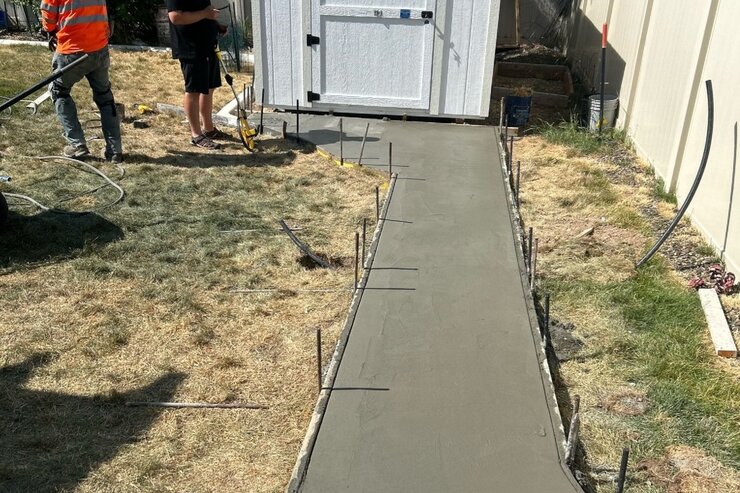
We first remove the failed surface and laitance by shot-blasting or grinding, exposing clean, sound aggregate that a new layer can grip. Then we apply a polymer-modified cement overlay — systems like Sika MonoTop or Mapei Planitop — from an eighth to three-eighths of an inch thick. Because these overlays are polymer-fortified, they bond chemically to the prepared slab and cure harder and denser than ordinary sidewalk concrete, with far better resistance to salt and abrasion.
Once the overlay has cured we apply a penetrating siloxane sealer that soaks about a quarter inch into the concrete and bonds at a molecular level, creating a hydrophobic barrier against salt brine and water. Unlike topical acrylic coatings that sit on top, peel, and turn slippery, a penetrating sealer never changes the texture or appearance and keeps the surface ADA slip-resistant. Together the overlay and sealer give you a new wearing surface engineered specifically for Rhode Island winters.
Replacing a slab because its surface is scaling is solving a skin-deep problem with a full amputation. Resurfacing costs roughly half as much, takes a day instead of several, needs no permit, and reuses the structurally sound slab you already have. You avoid demolition, disposal, and the week-long cure of a fresh pour, and you end up with a harder, more salt-resistant surface than the original.
Resurfacing is the right call when the spalling is confined to the surface and the slab below is solid and well-supported. If the concrete is cracked through, sunken, or delaminating in large sheets down to the sub-base, then the slab itself has failed and replacement is the honest answer. We core-check questionable slabs so the recommendation is based on the actual condition, not a guess.
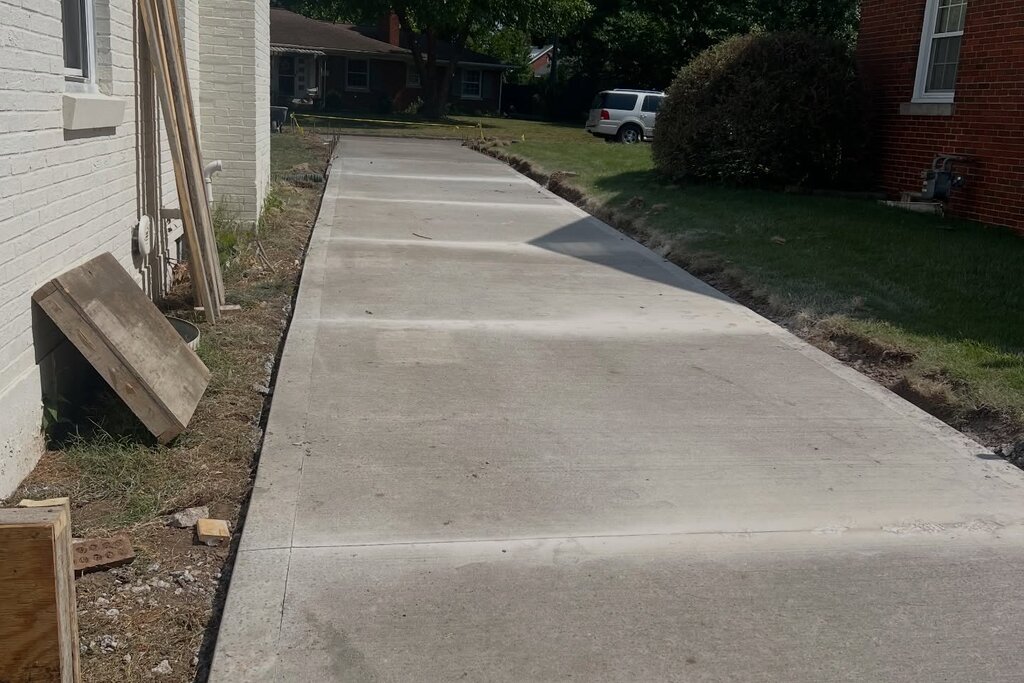
For surface-level spalling on a sound slab, an overlay-and-sealer restoration is a fraction of replacement cost and lasts well over a decade:
| Spalled front walk | Overlay + Sealer | Full Replacement |
|---|---|---|
| Typical price | $400 – $1,400 | $1,200 – $2,500 |
| Time on site | 1 day | 1 – 2 days |
| Permit required | No | Yes |
| Surface durability | Harder than original | New concrete |
| Keeps sound slab | Yes | No |
Because resurfacing typically saves 40 to 55 percent versus replacement and skips the permit and disposal, it is the smart choice whenever the damage is genuinely limited to the surface.
We rebuild and protect the surface so it looks new and survives Providence's salt and freeze-thaw:
Our polymer-modified overlays and penetrating siloxane sealers are chosen specifically for Southern New England's salt and freeze-thaw, and they cure harder than the original sidewalk surface. We core-check questionable slabs so you only pay to resurface concrete that is genuinely sound underneath.
Is your Providence concrete flaking or pitting on the surface? Resurfacing can make it like new for half the price of replacement. Call (401) 555-0148 or request a free estimate online and we'll be at your Providence-area property within two business days.