
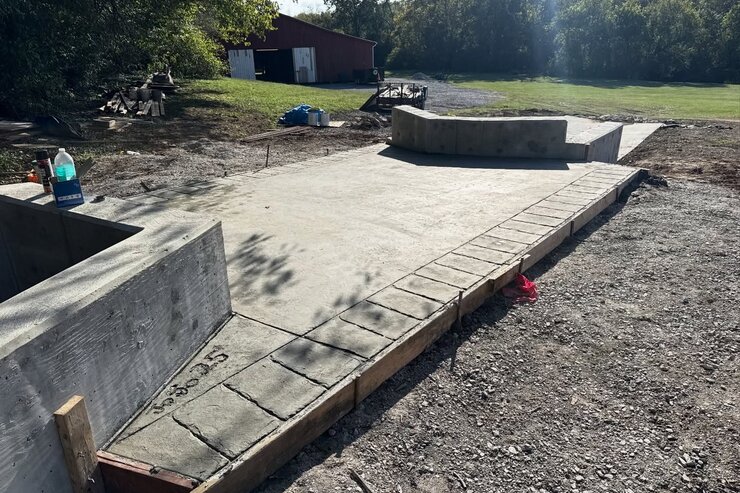
If two of your sidewalk panels have separated and one now sits higher than the other, a contractor may have already told you the whole section needs to come out. In most cases, that simply isn't true. Concrete grinding shaves the raised edge flush with the surrounding surface in a single visit — no demolition, no new pour, and usually for a fraction of what replacement would cost. Here's exactly how it works and when it's the smarter choice for a Providence sidewalk.
A poured sidewalk is not one continuous slab — it is a series of panels separated by control joints, and each panel moves independently with the ground beneath it. In Providence, three forces push panels out of alignment faster than almost anywhere in the country: more than sixty annual freeze-thaw cycles that heave the soil, dense glacial till and clay that swells when wet and shrinks when dry, and aggressive maple and oak roots that wedge under the concrete. The result is a vertical offset where one panel rides up over its neighbor.
The moment that offset passes a quarter inch, it stops being cosmetic. Both the Americans with Disabilities Act and the City of Providence's sidewalk standards classify a vertical displacement over 1/4 inch as a trip hazard, and under the city sidewalk maintenance ordinance the adjoining property owner is liable for it. That means a half-inch lip outside your home or storefront is a citation waiting to be written and a slip-and-fall claim waiting to happen — but it is also exactly the kind of defect grinding was made to fix.
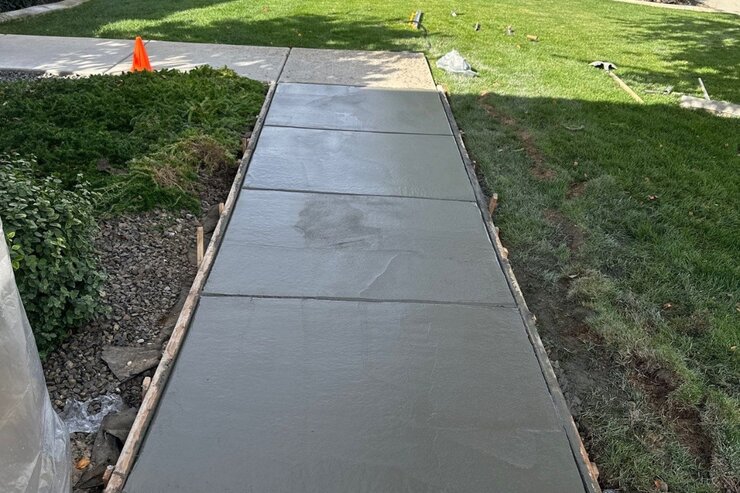
Grinding uses a diamond-segmented cup wheel spinning at high speed to abrade the raised concrete down to the level of the adjoining panel. Our crew first chalks the high side and measures the offset with a digital level, then sets up dust shrouds connected to HEPA-filtered vacuums so the silica dust is captured at the source rather than drifting across your yard or into a storefront. We grind in passes, checking the slope after each one, and feather the cut back twelve to eighteen inches so the transition is a gentle ramp instead of an abrupt step.
The finished surface is profiled to an ADA-compliant slope of 1:12 or flatter and given a light texture so it stays slip-resistant in the rain. Because grinding removes material rather than adding it, there is no cure time at all — the sidewalk is open to foot traffic the moment we sweep up. A typical residential trip hazard takes thirty minutes to an hour per joint, and we document the before-and-after with measurements you can keep for your insurer or hand to a city inspector.
Replacement means saw-cutting the panel, demolishing it, hauling the rubble away, forming, pouring 4,000 PSI concrete, and then waiting up to a week before anyone can walk on it — and a brand-new white panel next to weathered gray concrete never quite matches. Grinding sidesteps all of that. There is no demolition, no disposal fee, no permit for a simple grind, and no downtime, which is why it is the method ADA transition plans and risk managers prefer for sound concrete.
The one honest limit is structural: grinding is the right call when the offset is roughly 1/4 inch to 1.5 inches and the lower panel is solid. If the heave is taller than that, if the slab is cracked through, or if it rocks under load, grinding only postpones the problem and we will tell you so. We would rather lose a small grinding job than grind a panel that genuinely needs leveling or replacement — that honesty is why Providence property managers keep our number.
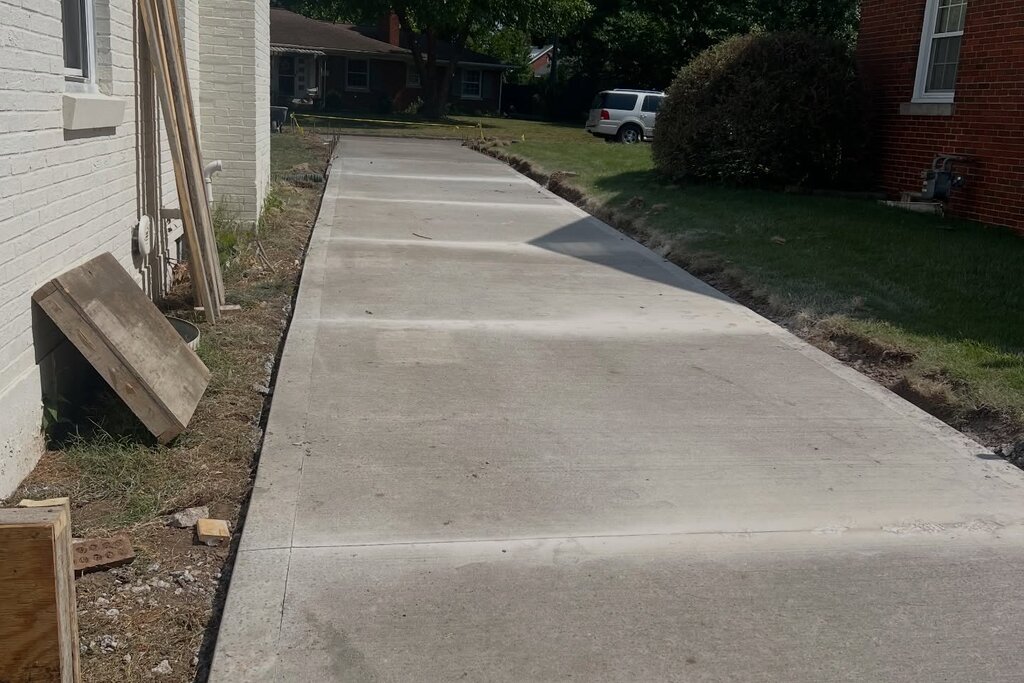
For a typical Providence trip hazard — one raised joint outside a home or business — the math strongly favors grinding. Here is how a single-location repair compares against tearing out and replacing the same panel:
| Single trip-hazard location | Concrete Grinding | Full Panel Replacement |
|---|---|---|
| Typical price | $250 – $450 | $600 – $1,100 |
| Demolition & disposal | None | $150 – $300 included |
| Downtime before use | Immediate | 3 – 7 days cure |
| Permit required | No | Yes (right-of-way) |
| Appearance match | Original concrete | New panel stands out |
Across a multi-hazard property the savings compound: we grind each additional hazard at the same address for less, and a commercial walkway with a dozen offsets is often made fully compliant in a single morning for less than the cost of replacing two panels.
Every grinding visit in Providence follows the same disciplined sequence so the result is safe, compliant, and documented:
SidewalkendsFarm has ground tens of thousands of feet of trip hazards across Providence and Providence County since 2004. Our crews are OSHA-trained in silica dust control, fully insured, and back every job with documented before-and-after measurements — so your grind holds up to both a city inspector and an insurance adjuster.
Have a raised joint or lip outside your Providence home or business? It is very likely a same-day grind, not a replacement. Call (401) 555-0148 or request a free estimate online and we'll be at your Providence-area property within two business days.